
The stack behind the system.
Domo built its own software to run its buildings and its own energy architecture to power them. Both exist for the same reason: when one company designs, builds and operates, the technology can be designed into the chassis rather than bolted on afterward.
Domo Software Solutions
One platform for property management and resident life, built in-house and run across every Domo community. Residents use one mobile app on iOS and Android. Operators see one record of the building.
Property management
Leasing, renewals, unit inventory, inspections and the operating record of every building, in one system.
Resident communications
Announcements, requests and two-way messaging with the community team, with every thread attached to the resident and the unit.
Rent, payments and accounting
Rent, deposits and fees collected in the app and posted straight to the ledger. Owner-side accounting is built in, not integrated.
AI concierge
Answers questions, books amenities, raises work orders and coordinates deliveries instantly, with a human team behind it for anything that needs one.
Access control
Mobile credentials for the front door, the unit, amenities and parking. Issued before move-in, revoked at move-out, logged in between.
IoT and smart home
Thermostats, lighting, leak and occupancy sensors installed in the factory and commissioned as part of the module, controlled from the same app.
Energy
Building and unit-level energy visibility, including each resident's share of solar generation and storage.
Operations data
Occupancy, leasing velocity by unit type, maintenance and energy history, structured so design, factory and construction teams can use it.
One app. Not six.
A new resident in a typical building is handed a separate app for the door, the thermostat, rent, packages, maintenance and amenities. Domo collapses all of it into one tenant experience, which is what TX means: UX, for the whole experience of living somewhere.
Six logins. Six vendors. Six support lines. None of them talk to each other.
 DomoiOS · Android
- Door & accessMobile key
- Climate & smart homeInstalled in the factory
- Rent & paymentsPosted to the ledger
- PackagesLocker code sent
- Work ordersAI concierge first
- Amenities & communityReserve in a tap
- EnergyYour balcony's solar share
Third-party names shown for comparison only. Glyphs are placeholders; swap in the official icons under each company's brand guidelines.
Energy, built into the chassis.
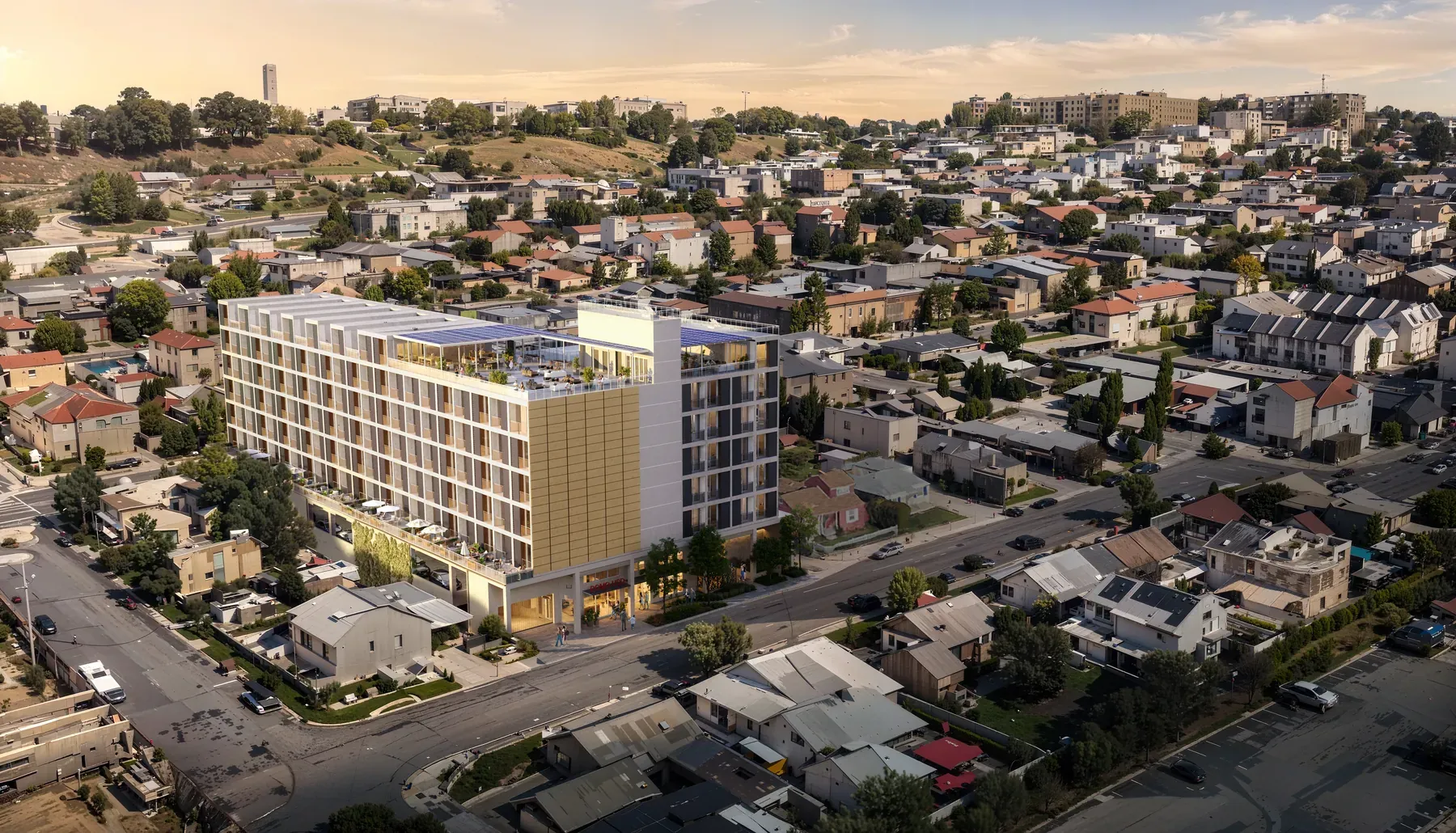
Most buildings put solar on the roof and stop. Domo treats the whole building as a generating asset: photovoltaic cladding on the facade, a battery in every building and solar balconies that let residents take part in the energy their home produces.
- PVFacade
BIPV cladded exteriors
Building-integrated photovoltaic cladding turns the facade into generating surface, installed on the module in the factory rather than retrofitted on site.
- kWhStorage
Distributed battery per building
Each building stores what it generates and manages its own use, smoothing demand and improving resilience community by community.
- TXResident
Solar balconies
Residents take part in solar energy at their own balcony, not just on a rooftop they never see, and watch their share in the Domo app.
The Domo Brain. One data layer across the whole company.
Most builders run a dozen systems that never meet: an ERP, accounting, project management, a factory system, leasing, BIM, email, spreadsheets. Domo runs them all into one in-house enterprise AI that structures the data around the things that matter, a site, a chassis, a module, a building, a resident, and hands decisions back to every division. It is Domo's data moat.
ERP and accounting, project management, the factory system, BIM and shop drawings, leasing and payments, IoT telemetry, permits, consultants, meeting notes and the spreadsheets in between. Every building built, every module produced.
One structured model of the company: sites, chassis revisions, modules, buildings, units, residents, vendors, projects and the ledger, linked so a number in operations traces back to a decision in design.
Decisions, pushed to the division that needs them: where the next site goes, what changes in the chassis, which station is drifting, how to sequence the crane, what a resident needs before they ask. Better, faster, and at a cost that pencils.